
I love doing anti-yeast therapy. I see people with complex problems who have often been to many doctors and received only minimal benefit. Then I prescribe anti-yeast therapy and they become better. I find doing this therapy as a doctor so gratifying because I love to see people become better.

-- Dr. Bruce Semon

What You Eat May be Giving You Alzheimer’s

By Dr. Bruce Semon, M.D., Ph.D.  © 2013

According to a new report, the costs of Alzheimer’s care will increase significantly in coming years.  Why?  Baby boomers will become old enough to develop Alzheimer’s and nobody can prevent this disorder.  At the same time, another study came out saying that researchers now have developed a rat with many genetic defects which will lead to Alzheimer’s in this rat.  Scientists will then study this genetically defective rat to learn how to develop new drugs to treat Alzheimer’s.  The highlight of this Alzheimer’s research is to create drugs to treat the disease in the future, not prevent it.

Scientists seem to have given up on Alzheimer’s prevention.  Perhaps we should not give up so quickly on prevention.  Is there any information which would help us to determine a way to prevent Alzheimer’s?

Let’s look at another trend.  Scientists know from existing research that people who eat less meat or are vegetarian develop less Alzheimer’s.  The scientists don’t know why.  But these studies point us in the right direction, and led me to perform a study that showed why people who eat less meat develop less Alzheimer’s.

How are these trends related? How is eating more meat related to Alzheimer’s?  And how can we prevent Alzheimer’s by looking at meat?

Let’s answer these questions.  Meat contains a cottonseed poison called “gossypol”.  I have performed a study on what happens when rats eat cottonseed and gossypol.  This study strongly suggests that Alzheimer’s can be prevented by eliminating this poison “gossypol” from our diet.

I explain all of this and more in my new book, Rottenseed!  Cottonseed, Alzheimer’s and Your Brain (anticipated publication June 2013).

How does gossypol get into meat and then cause Alzheimer’s?    Cottonseed is fed to animals.  Cottonseed is a byproduct of cotton farming, and is a large part of commercial animal feed.  Cottonseed contains gossypol.  Gossypol becomes part of our food by staying in the meat, fat, and milk of animals who are fed cottonseed.  Scientists have long studied gossypol to figure out just how much can be fed to animals without killing them.

Why does feeding cottonseed to animals cause Alzheimer’s in humans?  The cottonseed toxin gossypol is highly toxic, stable, long-lasting and hard to clear.  It remains in the meat and fat of animals, and in the milk of dairy cows.  We eat it.  We drink it.  It circulates in our bodies.  Gossypol goes to the brain.    Not only is gossypol  poisonous to animals, it is also poisonous to us.  Cottonseed is truly a Rottenseed.


We know from existing studies that when cottonseed is fed to animals, gossypol remains in the meat of animals and can be found in the milk of dairy cows.  When people eat meat and drink milk, they are eating gossypol. The gossypol circulates throughout our bodies and goes to the brain, accumulating and binding randomly to important structures, making those structures inactive.  This includes supporting structures of cells.    The cell dies without supporting structure.   In my recent study, when small amounts of gossypol were mixed into the diet of rats and fed for a lifetime, the brains showed signs of Alzheimer’s.

But can this really be true? Why has cottonseed become such a major part of the food chain without someone noticing this?  How can it be that scientists have known for a century that cottonseed is highly toxic to animals, without bothering to study whether feeding cottonseed to humans over their lifetimes is toxic to humans?  Has anyone else tested gossypol for seeing if it causes Alzheimer’s?  And if it does, why does the biomedical research community not know about this?

These questions are complex and I answer them more completely in my book, Rottenseed!  Cottonseed, Alzheimer’s and Your Brain.

Briefly, though, understand that incredibly, there are no labs currently looking at cottonseed and Alzheimer’s.  This appears to be for two reasons.  First, because the scientific community generally appears to be uninterested in the question of whether what we eat causes disease in general and Alzheimer’s in particular, and second, because answering the question requires very long-term studies which are hard to do in today’s funding cycles.  These are simplistic answers, but I go into great detail about these two problems in   Rottenseed!  Cottonseed, Alzheimer’s and Your Brain.

My interest in cottonseed problems started more than 20 years ago when I was a post-doctoral fellow at the National Cancer Institutes.  I was working in a lab on diet and cancer.  Gossypol was on a list of chemicals in the diet that may have to do with cancer because gossypol binds to DNA and also causes genetic mutations, which may cause cancer.  But as I looked at gossypol, gossypol looked to be more importantly a possible cause of Alzheimer’s.

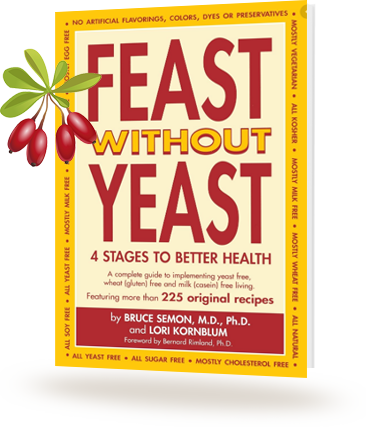
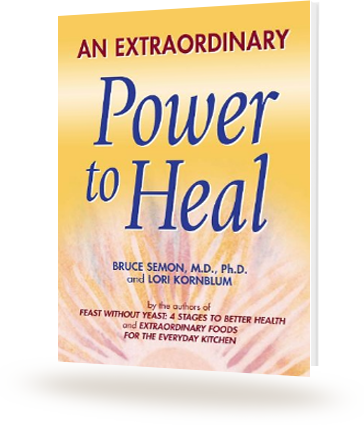
After trying for two decades to interest existing national labs in doing such a study, I decided to do it on my own in my own lab using rats as an animal model for humans.  We funded the study with private contributions and profits from our books, Feast Without Yeast: 4 Stages to Better Health (1999), An Extraordinary Power to Heal (2003) and Extraordinary Foods for the Everyday Kitchen (2003).

The challenge was designing a study that would not kill the animals in the process.  If a researcher feeds a lot of cottonseed quickly to an animal, the animal bleeds to death.   So cottonseed needs to be fed to animals in small amounts daily over a long period of time.  I was patient and I got results: the rats that ate the most gossypol over the course of their lives had the most signs of Alzheimer’s in their brains.  The rats that ate no gossypol over the course of their lives had no signs of Alzheimer’s.

This type of study replicates exactly the process of the human diet.  We do not eat huge amounts of gossypol in short periods of time.  Rather, we eat gossypol in meat and dairy and other products in small amounts over the course of our lives.

I published my results for scientists in the peer-reviewed medical journal, Medical Hypotheses, and am publishing them for lay people, as well as more detailed information, in  my forthcoming book–  Rottenseed!  Cottonseed, Alzheimer’s and Your Brain.  I also am engaged in a major replication of this study in an independent lab using larger numbers of animals over the next several years.  The profits from Rottenseed!  will go toward funding this study, as well as other studies on the relationship between what we eat and health.

So, let’s go back to the original question.  Why is it that people who eat less meat develop less Alzheimer’s?  The answer is easy to explain.  They eat less of the cottonseed toxin gossypol.

What can you do now to prevent Alzheimer’s?

  •  First, stop eating everything that contains cottonseed.  Look on packaged and processed foods.  You do not need to become a vegetarian.  Instead of eating commercially raised meat from animals that are being fed cottonseed, buy only meat from grass-fed animals, because they do not eat cottonseed.  Buy fish that is wild-caught, not farm raised.  Buy dairy products that are “pasture raised” or from “grass-fed cows.”  Eat eggs.  Egg-laying chickens do not get cottonseed because it turns the eggs pink.  Eating more eggs will not raise your cholesterol.  By taking these steps now, you can help yourself today.
  •  Second, you can read my new book, Rottenseed!  Cottonseed: Alzheimer’s and Your Brain.   My book will give you much more insight into the problems that cottonseed causes, not only by causing Alzheimer’s, but by raising cholesterol and causing a host of other health problems.
  • Third, you can participate directly in funding research on this subject by contributing to our non-profit, 501(c)(3) research foundation, Wisconsin Institute of Nutrition Research Foundation, Inc.  Your tax-exempt contribution will go directly to funding critical research on Alzheimer’s prevention that the mainstream scientific community is not interested in doing or funding.   Every contribution counts, no matter how small or large.

To participate in research to prevent Alzheimer’s, send a tax deductible contribution to:

 Wisconsin Institute of Nutrition Research Foundation, Inc.

P.O. Box 170867

Glendale, WI  53217

 For more information, call 1-877-332-7899


Are you serving Poison for Passover?

Passover is the feast of freedom, a time when Jewish people all over the world celebrate freedom from Egyptian slavery thousands of years ago.  Special foods are cooked.  For our own family, it was the key to unlocking the secret behind Autism.  You can read that story as well.

But many of the processed special foods contain toxins—in the form of Cottonseed Oil.  For reasons that escape us, Cottonseed Oil has become the oil of choice for processed Passover foods.  Why?  We don’t know.  This is what a typical Kosher for Passover section of the grocery store contains:


We advise NOT using cottonseed oil because cottonseed oil is known to cause major problems in animals,  including high cholesterol and heart disease.  Our new book, Rottenseed! Cottonseed, Alzheimer’s and Your Brain, is coming out in a few months and will explain this in great detail.

But we do know that you have a choice.  You can use other oils that are kosher for Passover, such as safflower, walnut, grapeseed and olive oils (but consult your own rabbi if you have questions).  We advocate using olive oil or safflower oil.

We urge you to eat safely.  Most of the recipes in Feast Without Yeast: 4 Stages to Better Health, and all of the recipes in Extraordinary Foods for the Everyday Kitchen, are great for Passover.  Both books contain special Passover menus to make your menu planning easier!  We also have some sample Passover Recipes on this website. You can order them from Amazon.com by clicking on the link to the right.  They are available on Kindle as well.

The Hidden Cause of Infertility–Cottonseed in Your Diet–and What You Can Do About It

Infertility affects as many as 10% of couples and can be devastating.  Sometimes the man has the problem, sometimes the woman, sometimes with their interaction and sometimes no cause can be determined.  When the problem is with the man, many times the problem is a low sperm count or a problem with the sperm.  Sperm problems may be due to hormonal problems, genetic or anatomical problems but often the cause is unknown.[i] When the problem is with the woman, the cause may be  failure to ovulate.  Such failure is often thought to be due to a hormonal problem.[ii]   Now if you look further and ask what can cause a low sperm count in an otherwise healthy man, you will find such problems listed as hormonal disorders.  But there is another, hidden reason, that you won’t find anywhere else. The hidden cause of infertility comes from our food—specifically, the cottonseed that is part of our food chain and that we eat every day.

Why do I say this? Cottonseed toxins interfere with fertility.  This is a  known fact.  Cottonseed causes infertility in rats and in China, the government wanted to use a cottonseed toxin as male birth control–but couldn’t because the men became infertile.

Want to know more?  click here.

[This information is a preview of what's in our new book, Rottenseed!  Cottonseed, Alzheimer's and Your Brain, which will be published later this year.]


Case Files: Using Homeopathy Successfully to treat Nerve Pain related to Cancer Treatment

Posted by Dr. Bruce Semon, M.D., Pn.D., December 8, 2012

Cancer is an extremely difficult and complicated medical condition.  Sometimes the side effects of cancer treatment can feel just as difficult.  This is an actual, ongoing case (name has been changed of course) of a woman who suffered from severe side effects of cancer treatment, and whom I was able to help with homeopathy.  For more information about homeopathy and cancer, and about preventing cancer, click here.

I have a patient who is a 51 year old woman, whom  I will call Adrian.  Adrian has had breast cancer.  She  completed treatment about 15 months after diagnosis, which was about 10 months prior to my seeing her.  Her treatment consisted of radiation, chemotherapy and surgery.  The last treatment was a chemotherapy infusion every three weeks.

Adrian is happy that the treatment was effective for the cancer, but she is very upset about the after-effects from the treatment itself because she has become completely debilitated.

Adrian came to me tired and in pain.  She stated that the tiredness began with the radiation.  The pain came after the chemotherapy.  Adrian reported that she  has pain from her thighs down, which is so bad that sometimes she falls and the pain affects her gait.  Sometimes the pain is so bad that she cannot not wear shoes.  She later described the pain as burning daggers in her feet. Adrian required a cane to walk.

Because of the tiredness and pain, Adrian’s life totally changed.  She had to stop working.  She also has problems with memory.  She can forget what she is doing or saying.   Adrian reports that she used to be a high level professional, “stable and intelligent.”  In her job, she made tough decisions.  She was very organized.    Now, she has a loss of concentration and difficulty finding words.  She reports that she uses the wrong words.  She also has insomnia.  She can go three days without sleep now.   Adrian has trouble organizing tasks.  She also has problems with social settings.  She is nervous around people.

Adrian reports that she used to be “strong” in the doctor’s office.  When she first started cancer treatment, she could handle things.  Not anymore.  One of her other doctors  diagnosed her with PTSD, Post Traumatic Stress Disorder.   Now she feels like screaming inside the doctor’s office.  She was recommended for psychotherapy but she was afraid that the therapist would make her relive all the experiences she went through.  She felt that the cancer doctors discounted her feelings, and her post-chemotherapy pain problems.

Adrian came to see me for psychiatric treatment.  This is a case in progress.

I treated Adrian  with standard medications because she did not want to try something alternative at first.  She was too exhausted and in pain to consider alternative treatment, although I offered it.  Over the next few months, I prescribed medications for both sleep and concentration.  Nothing helped.   She complained repeatedly about the doctors not listening to her about the severe pain she was in.  She could not do simple tasks or keep her house.  She could take days to balance her checkbook.

I again offered Adrian the possibility of alternative treatment based on the  severity of the pain in her feet, which was termed “peripheral neuropathy.”  This is a relatively common side effect of cancer treatment and can be quite debilitating.

I had previously helped someone who had such pain with a homeopathic remedy.  This other person was young and had been treated for disseminated colon cancer.  She had had much difficulty with numbness in her hands and feet, mixed with pain.  This patient had improved significantly.

I offered this remedy to  Adrian.  She took the remedy three times.  She came back a few weeks later.  Her severe pain in her feet is much better.   Adrian no longer has the feeling of “burning daggers” in her feet.  She also goes to physical therapy and sees a chiropractor.     She still has problems with concentration.   Today is the first day she is not using a cane.  She is more mobile, although she still has some leg and knee pain.

Her improvement with three doses of a homeopathic remedy is really tremendous.  Mostly I noticed that she was smiling.   Adrian asked me for help with energy.  I continue to see Adrian as a patient.


Case Files: Teenage Depression–Completely turned around!

Posted by Dr. Bruce Semon

I had a patient who presented as a very depressed teenager, 16 years old, whom I will call Chrystal (not her real name).   She was so depressed that she was unable to attend school, or even speak.   Imagine how devastating this was to Chrystal, 16 years old with her  entire life ahead of her!

When she came in,  Chrystal had symptoms of  depression and  fatigue.   These problems had been intermittent for three years.  Periodically she stops sleeping, has nightmares, has trouble with her thoughts.  The previous year, her Freshman year, she missed a lot of school. Sometimes Chrystal  is unable to talk and unable to take care of herself.  When she’s fine, Chrystal  is a 4.0 student and an athlete.  Usually the episodes are less than 2 weeks.  Chrystal blames home stress.  She does not sleep well during these episodes.  She says she would like to go back in time.  She was taking vitamins and minerals for neurotransmitters and rhodiola.

I prescribed Nystatin Oral Suspension, which is an easy to take form of Nystatin, but not ideal.  Two months later, she still was depressed, fatigue,  had food sensitivities and “leaky gut.”  The first appointment was during the summer, before the start of school, and Chrystal had not complied with treatment, which is not too unusual.   She came back about a month after school started.  Chrystal reported that she was not attending school, and said she “was not thinking.”   She had all of the problems she reported earlier.

To me, as her treating doctor, she looked terrible.  She could not express herself.  She was  crying but if her mother tried to say what was going on, she would argue with her mother and not let her mother talk because she could not listen to what her mother had to say about her.   I feared that she was so bad, she might be developing major mental illness.

I convinced her to try a different form of Nystatin plus the Feast Without Yeast diet.  I prescribed Nystatin oral powder instead of the oral suspension.  I also started her on a homeopathic remedy called lycopodium, which is for anxiety and insomnia in children.

She came back two weeks later.  She had attended school since starting the Nystatin.  She was smiling and happy and told me she felt fine.  The contrast could not have been more striking.

I am hoping that she will continue to follow the treatment plan so she can live a happy, productive life.


Case Files: A New Understanding of Schizophrenia

We just posted a completely new page with thoughts about a new understanding of Schizophrenia and potential new treatments based on homeopathy!  Click here to see this.

Poisons in our food: The Arsenic-Cottonseed Link

Posted by Dr. Bruce Semon, November 17, 2012


Recently, Consumer Reports has written two alarming articles about arsenic in our food supply.  In January, 2012, Consumer Reports reported on arsenic in apple juice and grape juice.  (Arsenic in your juice, How much is too much? Federal limits don’t exist, Consumer Reports Magazine: January 2012)  They followed upon on this report with an investigation of arsenic in rice ( Arsenic in your food,Our findings show a real need for federal standards for this toxin,Consumer Reports magazine: November 2012)

The foods tested, rice and juice, contained varying levels of arsenic, from low to high.  Of particular concern was rice.   Arsenic was present in rice and rice-containing foods, from 50 parts per billion to 900 parts per billion.  To put this in context,  New Jersey sets an arsenic level of 5 parts per billion in drinking water.   Consumer Reports warned people  to avoid products which have higher arsenic levels and to watch one’s overall intake of rice products.

I was quite alarmed by the findings of Consumer Reports, because arsenic is a poison.  But rice and juice are not the only sources.  I will explain below how arsenic permeates our food supply, chiefly infiltrating through foods containing cottonseed and cottonseed oil.  This includes just about everything in our food supply.

The opening question is, why is arsenic found in rice products?    The reason is that rice is most commonly grown in the same regions where cotton is grown.   Arsenic-containing pesticides are used very heavily in cotton-growing areas, and arsenic is still present in the environment in these places.   Rice plants pick up the arsenic from the soil.

If rice picks up arsenic, what about cotton?  The answer is yes, cotton also picks up the arsenic. We generally think of clothing when we think of cotton.  We don’t eat the clothing, so this is no big deal.  However, the seed from the cotton plant is a major part of our food supply.  Cottonseed enters our food supply not only directly, as cottonseed oil, but indirectly as cottonseed meal which is a large component of animal feed     Cottonseed oil is used heavily in commercial preparation of oil-containing foods, including potato chips.

Unfortunately, nobody has measured arsenic in cottonseed-containing foods recently.  However, dating back to 1969, cottonseed contained significant amounts of arsenic. .[i]  Some of the measurements are in the same range as for rice (130 parts per billion) but the numbers go as high as ten times as high as that amount.    The arsenic content of the cottonseed meal which is fed to animals was measured at 10 to 30 times the arsenic content of rice.[ii]

Cottonseed is fed heavily to farm fed fish, to chickens, to beef cattle and to pigs.  So what is the arsenic content of meat?  In some studies reported in 1969, meat and poultry usually have less than 1000 ppb[iii] but fish and marine animals accumulate arsenic more efficiently and can contain 1000 to 10000 parts per billion and sometimes more.[iv]  In 1973, meat, fish, poultry and dairy products accounted for 78.7 % of the dietary intake of arsenic.[v]

We need more research on the amounts of arsenic in all of our food, including cottonseed and cottonseed containing food!

If you are concerned about the poisons in the foods you eat, watch for Dr. Semon’s new book on the relationship between cottonseed and Alzheimer’s, due out Spring 2013.


[i] Bradicich, R. Foster, N. E., Hons, F. E. Jeffus, M. T., Kenner, C. T. Residues in food and feed.  Arsenic in cotton products and various commodities.  Pesticides Monitoring Journal.  3(3): 139-41, 1969.

[ii] Ibid.

[iii] Corneliussen, P. E. : Residues in food and feed. Pest. Monit. J. 2, 141 (1969)

[iv] Lunde, G.: Activation analysis of trace elements in fishmeal. J. Sci. Food Agr. 19, 432 (1968)

Lunde. G. : Analysis of arsenic and selenium in marine raw materials. J. Sci. Food Agr. 21, 242 (1970).

[v] Mahaffey, K. R., P. E. Cornliussen, D. F. Jelinek and J. A. Fiorino: Heavy metal exposure from foods.  Environ. Health Perspectives. 12, 63 (1975).

Autism and Cottonseed: the hidden menace

I read recently in Nature that a child is more likely to be autistic if the father is older at time of conception.[i]  The risks increase starting at the age of 25.  The risk for older fathers can be up to 2%, or 2 in 100 births.  Older fathers are more likely to have an autistic child because as men age, they are more likely to have accumulated “spontaneous” genetic mutations in their sperm cells.  Sperm cells reproduce and divide every 15 days so that over time small changes in the genes may gradually accumulate.  By contrast, women’s eggs do not continue to divide, so there is no increased risk of autism for an older woman than for a younger woman giving birth .

No one can truly account for the “spontaneous” mutations and where they come from.  Men who are between the ages of 25 and 35 are considered young.  Their skin, organ, and other cells keep dividing with very few mutations. So why should sperm cells accumulate mutations which may cause some autism?

Maybe we should look for an answer in something that is known to target sperm cells.  To read more, click here

Case Files: Successful Treatment of Ulcerative Colitis!

Posted by Dr. Bruce Semon:

I had a patient who suffered from ulcerative colitis that was so bad she could not do the type of things that young women her age like to do, which for her was to go abroad on internships.

She was only 19 year old.  She had suffered from ulcerative colitis since age 9, for ten years.   She came to me originally several years ago.  I saw her again fairly recently.   When she first came to see me, she told me that she had been diagnosed with ulcerative colitis at age 9.  She had diarrhea and bloody stools.  She took prednisone and then developed other problems.  She had tiny cuts that would not heal and skin problems.  She also developed acne and skin scarring.  These are not fun to have at any age, particularly in early adolescence.   These problems persisted and at the age of 12, she decided prednisone was not helping and was causing skin and acne problems.

She then stopped seeing doctors.  She presented to this writer while in college at the age of 19.  She had not seen a doctor from ages 12 to 19.   She still had watery diarrhea, occasionally red.  She had used prayer and willpower but the process had not been pleasant.  She had never had a remission, no sustained normal time.  She was having 5 to 6 episodes of watery diarrhea per day.  She had acne on her face and skin scarring (keloids).

When she came to see me, I started her on the Feast Without Yeast diet and nystatin oral powder.

She came back a few months later.   She no longer had blood in her stool but was still having watery diarrhea frequently.  She was very upset and crying to have to deal with something other people did not have to deal with.  Overall she had improved but symptoms would get better, then worse again.  At first, she was still eating bread.  She was taking 1/8 tsp twice a day of nystatin oral powder.  She was advised that this dose was too low and that she should increase the dose.

She came back about nine months later.  Amazingly, she had taken a backpacking trip through Europe and done alright.  She was doing better but still had some moments.  She reported that she had slowly improved.  She was about to go abroad to teach English.

She came back a year later and reported that her skin was healing more normally.  She was still taking nystatin.  She stated she was feeling more normal over time.  She felt alright and had no major problems.  She was having some days in which she had to use the bathroom more.  Overall, she reported major improvement.

I saw her most recently a few months ago.  She was talking about going abroad again.  She stated her bowels were working well.  She stated she had a bad day about once a month but mostly she was normal.  Her skin was mostly normal.  She was healing more easily.  Her facial skin was clear.  Her ulcerative colitis was overall much improved.  Her emotional state was fine.  She was even considering going to graduate school.

For anyone who suffers from debilitating Ulcerative Colitis, this is good news.  The improvement took time, but it worked.  She is able to have a much different life now than she had when she first came to see me.

Dr. Bruce Semon

Case Files: Feast Without Yeast Diet cures Numb Hands, improves Mood Swings in 6 weeks

This is a post from the medical practice of Dr. Bruce Semon, M.D., Ph.D., about a recent case that he has in which a young woman was cured of numbness in her hands and bad mood swings in just 6 weeks.  This is a real case!

An 18 year old young woman, whom I’ll call Sally (not her real name),  came to see me.  She told me she was “stressed out,” she felt she needed to be busy, and was not able to relax.  Sally told me she was doing well  in school, in fact she is  an A student and  a student athlete.  She keeps on pushing herself.  According to Sally, her mood swings are related to food.  When she eats too many carbohydrates, she   can become more erratic.  Then she has anger management issues.  Sally also told me that she has numbness in the hands, which Sally later described as cold hands and poor circulation.    Sally has extreme muscle pains all the time.  Her lower back always hurts.  When I first saw Sally, she appeared depressed.

Sally’s mother thought Sally had a yeast problem.  Mother explained that Sally has a history of colic and erratic behavior.  Her moods would change.  Sally doesn’t eat a lot of junk; mother  taught her to eat well.  Her mother said Sally was stubborn from the day she was born.  Foods affected her a lot.  She had to be fed well.

Based on Sally’s history and symptoms, I agreed that she was an appropriate patient for the Feast Without Yeast diet and Nystatin.  Sally agreed to try the Feast Without Yeast diet.  She also agreed to try  nystatin oral powder.

Sally returned six weeks later.  She was significantly better.   Sally no longer appeared depressed and stated she is not depressed.  She was completely cured of the problem of numbness in her hands.   Sally’s  pains were much better, although she still had some pain in her lower back.

Sally’s mother has noticed a big difference in Sally’s mood.  Mother reported that Sally is doing well.  Her behavior and mood are much better.  Mother reported that Sally has had no outbursts, no screaming fits.  She is able to study, and has a lot of homework to do! Sally is following the anti-yeast diet and is taking nystatin.

For more information on Dr. Semon’s practice, click here or call 1-877-332-7899.  Dr. Semon is accepting new patients.